AI SEARCH // FUTURE OF SEO
Generative Engine Optimization (GEO)
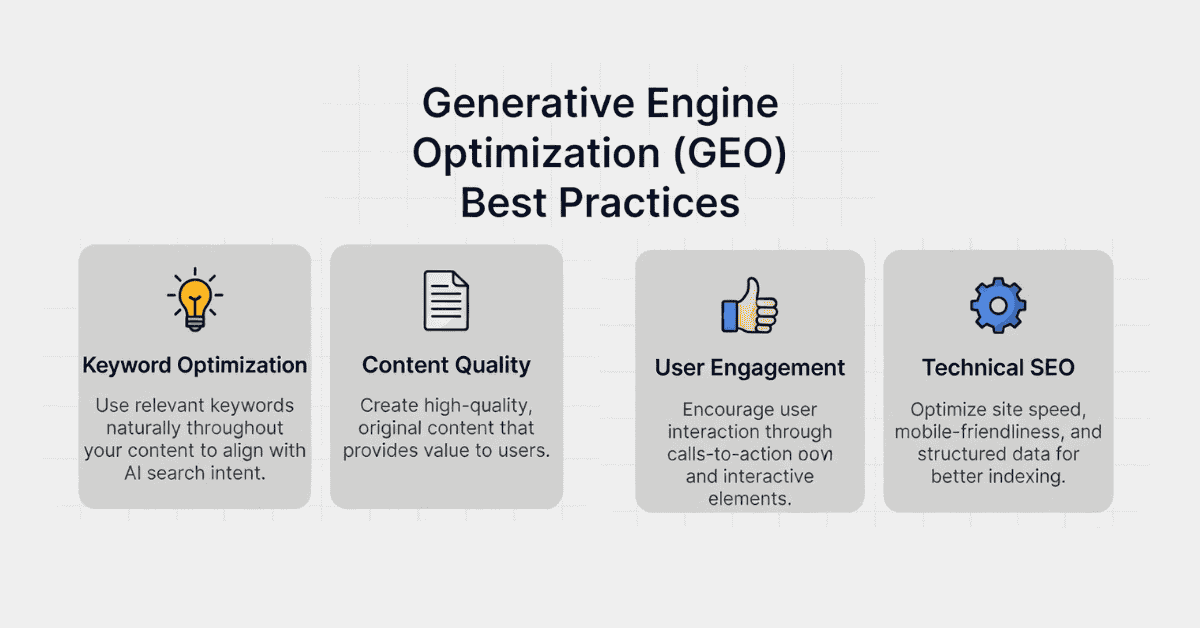
GEO Best Practices for AI Search
In the ever-evolving world of digital marketing, traditional Search Engine Optimization (SEO) has long been the go-to strategy for boosting visibility on platforms like Google. But as we move deeper into 2026, a new player is reshaping how we think about search: Generative Engine Optimization (GEO). With AI-powered search engines like Google AI Overviews, ChatGPT, Perplexity, and even emerging tools from xAI, content creators and marketers need to adapt. GEO isn't just about ranking high—it's about ensuring your content gets cited, quoted, and featured in AI-generated responses. This shift is driven by the rise of large language models (LLMs) and retrieval-augmented generation (RAG) systems that pull and synthesize information in real-time.
Why does this matter? Well, users are increasingly turning to conversational AI for answers, bypassing traditional search results. According to recent studies, AI search queries have surged by over 70% in the past year, and content optimized for these systems sees significantly higher citation rates. If you're not optimizing for GEO, your content might be invisible in this new landscape. In this article, we'll dive into the best practices for GEO, helping you craft content that's not only discoverable but also authoritative in the eyes of AI.
GEO vs. Traditional SEO: What's the Difference?
Before we get into the nuts and bolts, let's clarify what sets GEO apart from SEO. SEO focuses on keywords, backlinks, and page rankings to drive clicks. GEO, on the other hand, prioritizes being a reliable source for AI to extract and summarize information. It's about topical authority, structured data, and making your content easy for machines to parse and reference.
For instance, while SEO might emphasize meta tags and keyword density, GEO leans into conversational queries, entity mapping, and E-E-A-T (Experience, Expertise, Authoritativeness, and Trustworthiness) signals that AI engines value. Think of it as evolving from ranking on page one to being the first source an AI chatbot quotes. This approach is crucial for AI-driven search, where responses are generated on the fly based on user intent rather than rigid algorithms.
Core Best Practices for GEO in AI Search
Drawing from the latest insights in the field, here are some proven GEO strategies to implement. These aren't just theoretical—they're backed by real-world testing on platforms like Perplexity and ChatGPT.
1. Lead with Quick, Direct Answers
AI loves content that gets to the point. Start your pages or sections with a concise 40-80 word summary that directly addresses the user's likely query. This "quick answer" format makes it simple for LLMs to extract and cite your information, reducing the chance of your content being skipped. For example, if your article is about "best practices for GEO," open with a TL;DR that outlines the top tips right away.
2. Structure Content with Question-Based Headings
Mirror how people actually search in AI tools by using H2 and H3 headings phrased as questions. Draw from "People Also Ask" (PAA) sections in traditional search to align with conversational queries. This boosts extractability, as AI often pulls from content that matches natural language prompts. Headings like "What Is Generative Engine Optimization?" perform better than vague ones like "Introduction to GEO."
3. Incorporate Structured Data and Schema Markup
Don't overlook technical elements. Add JSON-LD schema for FAQs, Articles, How-Tos, and Organizations to help AI understand your content's context. This can increase citations by up to 28%, as it clarifies relationships and makes data easier to parse. Tools like Google's Structured Data Testing Tool can validate your implementation.
4. Build Topical Authority Through Entity Mapping
Declare a primary entity (like "GEO best practices") and link to 3-6 related entities from authoritative sources, such as Wikipedia or industry reports. This creates a web of context that AI recognizes as expert-level content. Use pillar-cluster models: A main pillar page on GEO linked to cluster pages on specific tips.
5. Use Scannable Formats Like Bullets, Tables, and Summaries
AI scans for digestible info, so break up text with bullet points, numbered lists, and tables for stats or comparisons. Include an "answer table" summarizing key facts, pros/cons, or metrics—these are gold for extraction. Avoid dense paragraphs; aim for 2-3 sentences per idea to enhance readability for both humans and machines.
6. Demonstrate E-E-A-T with Citations and Original Data
Back up claims with data from credible sources, and publish your own research—like surveys or benchmarks—at least quarterly. This positions you as a primary source, boosting trust signals that AI prioritizes. Include author bios, publication dates, and links to originals to amplify authority.
7. Optimize for Multi-Platform Presence and Brand Mentions
GEO extends beyond your site. Build mentions on Reddit, LinkedIn, YouTube, and podcasts, as AI often cites user-generated content. Focus on co-citations (being mentioned alongside competitors) through PR and partnerships. This signals relevance without relying solely on backlinks.
8. Ensure Technical Accessibility for AI Crawlers
Make your site crawlable by bots like Bingbot and OpenAI's crawlers. Implement an llms.txt file for site overviews, keep sitemaps updated, and prioritize mobile-friendliness and fast load times. Regular refreshes (quarterly for high-value pages) keep content fresh and relevant.
9. Test and Iterate with AI Tools
The best way to refine? Query AI platforms with your target questions and see if your content gets cited. Adjust wording, structure, or data until it does. Tools like Semrush or Ahrefs can track AI mentions. This iterative approach ensures ongoing optimization.
10. Align with Conversational and Long-Tail Queries
Shift to long-tail phrases that mimic spoken questions, as they make up over 70% of AI searches. Create content around customer support queries or forum discussions to match user intent precisely.
Implementation Tips for GEO Success
Getting started with GEO doesn't require a complete overhaul. Begin with a GEO audit: Analyze your top pages using free tools like content checkers to spot gaps. Then, restructure high-priority content, adding schema and quick answers. Coordinate across teams—align ad copy with organic messaging for consistent authority signals.
Remember, GEO is about quality over quantity. Focus on creating value-driven, original content that AI wants to reference. And keep an eye on updates; as AI evolves, so will best practices.
Tools and Monitoring for GEO
To measure success, track citation rates rather than just traffic. Use:
- Ahrefs or Semrush: For AI mention tracking.
- Perplexity and ChatGPT: For manual testing.
- RankPrompt: To analyze LLM responses.
Regular monitoring helps you adapt to changes in AI algorithms, ensuring long-term visibility.
Wrapping Up: The Future of Search Is Generative
Generative Engine Optimization is no longer optional—it's essential for thriving in AI search. By focusing on clear, authoritative, and extractable content, you can position your brand as a go-to source in this new era. Start implementing these best practices today, and watch your citations soar. As AI continues to dominate search, those who adapt will lead the pack. If you're ready to dive deeper, consider running your own GEO tests and sharing your findings—after all, community insights drive progress in this space.