AI SEO // GENERATIVE SEARCH
Answer Engine Optimization (AEO): The Future of Search in 2026
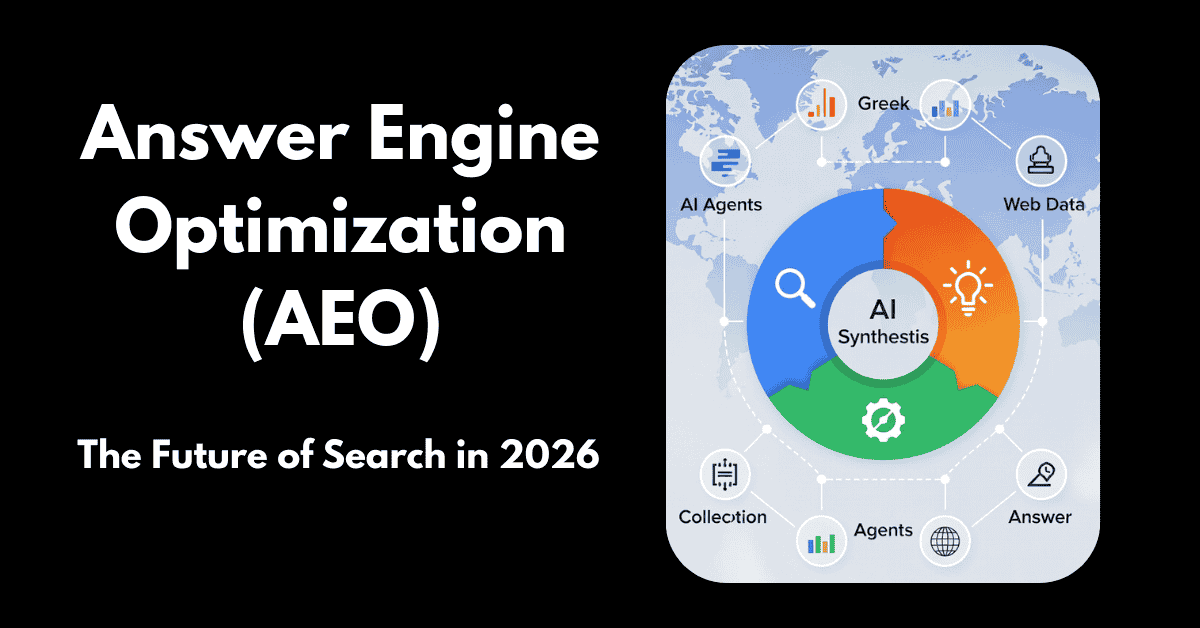
Stay ahead in the digital game, Answer Engine Optimization (AEO) is where it's at right now in 2026. It's all about getting your content picked up and cited by AI tools like ChatGPT or Google's AI Overviews, so people get answers straight from you without even clicking through.
Key Points on AEO for 2026
- AEO focuses on AI citations over traditional rankings, helping brands show up in zero-click answers where traffic might dip but trust skyrockets.
- With AI handling up to 25% of searches, optimizing for clear, structured content means higher conversions—think 23x better than old-school organic traffic.
- Trends lean toward local tweaks, answer-first formats, and multi-modal stuff like videos, as AI pulls from diverse sources for personalized replies.
- It seems likely that brands ignoring AEO could lose visibility, but those adapting see quicker leads and stronger authority, especially in competitive fields.
- Evidence points to a balanced approach: Merge AEO with SEO for full coverage, but prioritize entity clarity to avoid AI mix-ups or third-party takeovers.
Why AEO Matters More Than Ever
Picture asking your phone for the best running shoes, and it just gives you a quick rundown with brand mentions—no endless scrolling. That's AEO in action, shifting us from keyword hunts to instant, trustworthy answers. In 2026, with ChatGPT hitting 800 million weekly users and search referrals potentially dropping 43% over the next few years, brands need to be the go-to source AI cites. It builds trust fast, as AI users feel more positive emotions like satisfaction when shopping this way—72% plan to use it more.
Quick Strategies to Get Started
Start simple: Make your content easy for AI to grab. Use schema markup for entities like products or locations, lead with concise answers, and track citations with tools like SE Visible. For example, local pages with clear NAP details boost geographic hits, turning AI queries into high-intent leads that convert 27% of the time. Keep it human—add real examples and visuals to stand out.
Potential Challenges
Not everything's smooth; zero-click searches mean less direct traffic, and AI might pull from competitors if your info's inconsistent. But hey, that's where empathy comes in—treat it as a chance to refine your brand story across platforms.
Alright, diving deeper into Answer Engine Optimization (AEO) for 2026—it's not just a buzzword; it's how brands are actually winning in this AI-driven world. We're talking about optimizing your stuff so tools like ChatGPT, Perplexity, or Google's AI Overviews pick you as the reliable answer, often without users ever leaving the chat. Traditional SEO? It's still around, but AEO flips the script: Instead of chasing clicks and rankings, you're aiming for citations, mentions, and that zero-click influence where AI shapes opinions right away. Think of it as being the trusted advisor in someone's pocket—research suggests this leads to way better conversions, like 23x higher than regular organic visitors, because AI pre-qualifies folks with spot-on intent.
What Exactly is AEO and How Does It Differ from SEO?
AEO is all about making your content AI-friendly so it gets surfaced in direct answers. Unlike SEO, which obsesses over keyword stuffing and backlinks to climb SERPs, AEO prioritizes context, structure, and trustworthiness for AI models that interpret meaning over matches. For instance, SEO might get you a top spot in blue links, but AEO ensures you're cited in an AI summary, even if no one clicks—perfect for zero-click searches that are exploding. In 2026, with AI chatbots absorbing 25% of queries (as Gartner predicted), this shift means brands control narratives pre-click, boosting lead quality and velocity. A key difference? Measurement: Track AI citations and sentiment, not just impressions.
The Big Picture Impact on Brands and Users
Brands that nail AEO aren't just visible; they're influential. AI traffic converts at double the rate and in fewer sessions than other sources, turning casual queries into quick sales. Users love it too—72% say they'll lean more on AI for shopping, feeling optimistic and satisfied with the streamlined experience. But there's a flip side: If your entity's fuzzy (like inconsistent pricing across pages), AI might skip you or worse, cite a rival or Reddit thread. For tech brands, this means embracing AI discovery optimization, where visibility is earned through being recommended, not ranked. Predictions for 2027? Traditional search dips further as AI replaces links, with organized data and reputation trumping everything.
Top Emerging Trends Shaping AEO in 2026
From what I'm seeing, AEO trends are evolving fast, blending tech with user-centric vibes. Here's a rundown of the nine big ones, with tips to implement them right away.
- Context Over Keywords: AI digs intent and semantics, so structure your content with clear definitions and relationships. Benefit: Easier for AI to parse and cite. Tip: Use step-by-step guides for "how-to" queries.
- Entity Strength and Clarity: Keep your brand details consistent everywhere. Benefit: Builds AI trust, avoiding hallucinations. Tip: Create a "source of truth" doc and use schema like Organization.
- Structured Info Wins: Lists, tables, and short summaries beat long prose. Benefit: AI extracts reliably. Tip: Start sections with 40-60 word answers.
- Conversational Intent: Optimize for full questions like "Which CRM for small teams?" Benefit: Matches natural AI queries. Tip: Mirror human speech in headings.
- Multi-Modal Optimization: Include images, charts, and videos with alt text. Benefit: AI pulls from visuals for richer answers. Tip: Add instructional diagrams.
- High-Density Content: Be concise and value-packed. Benefit: Quick comprehension boosts selection. Tip: Cut fluff, focus on insights.
- AI-Driven Comparisons: Structure product pages for easy contrasts. Benefit: Gets you in alternative suggestions. Tip: Use neutral, attribute-deep tables.
- Expertise Signals: Add real examples and human touches. Benefit: Reduces AI errors, shows authority. Tip: Include case studies.
- Zero-Click Discovery: Optimize for citations in answers. Benefit: Influences without traffic. Tip: Focus on micro-intents tied to revenue.
And to make this easier, check out this table comparing key AEO trends across industries based on 2026 benchmarks.
| Strategy | Action | Industry Context | Impact Metric | Implementation |
|---|---|---|---|---|
| Local Pages for Geo Visibility | Tailor content to regions with NAP and schema. | Real Estate (high AIO at 4.48%) | 27% lead conversion from AI. | Dedicated pages per location with FAQs. |
| Answer-First Formats | Lead with key points, lists, bolding. | Health Care (48.75% AIO trigger rate) | 23x higher conversions. | Inverted triangle: Core answer up top. |
| Entity Consistency | Uniform brand info across sources. | Financials (nerdwallet.com leads domain share) | Reduces third-party citations. | Schema for Product/Service; update everywhere. |
| Multi-Format Content | Optimize videos, audio with transcripts. | IT (2.8% AI traffic) | 87.4% from ChatGPT. | YouTube chapters for timestamps. |
| AI Visibility Tracking | Monitor citations, sentiment. | Consumer Staples (amazon.com 17.99% share) | 1.08% overall AI traffic. | Tools like SE Visible for dashboards. |
| Conversational Targeting | Natural phrases in content. | Utilities (Gemini 21% traffic) | 800M ChatGPT users. | Q&A sections for "why/how" queries. |
| Structured Data Emphasis | Schema for extraction. | Industrials (blog/video content cited most) | 25% search drop by 2026. | FAQ, HowTo markup on pages. |
| Expertise and Examples | Real insights, human signals. | Communication Services (0.25% AI traffic) | Higher trust in answers. | Case studies with E-E-A-T. |
| Zero-Click Optimization | Focus on being cited. | All (5.5M AIO from 21.9M searches) | 43% referral drop predicted. | Micro-intent content for revenue ties. |
Best Practices and Tools to Boost Your AEO Game
Getting practical? Unify AEO with SEO: Align intents, add schema to existing pages, and use tools for monitoring. Top tools include SE Visible ($99/month) for visibility scores and sentiment; Nightwatch ($39 + add-on) for geo-tracking; Goodie AI ($495/month) for optimization hubs. Strategies: Platform-specific tweaks—like factual precision for Perplexity or narratives for ChatGPT—and dynamic adaptation via feedback loops. For benchmarks, AI referral traffic sits at 1.08% overall, with ChatGPT dominating 87.4%, but varies by industry—IT leads at 2.8%.
Challenges and How to Tackle Them
Sure, hurdles exist: Declining clicks, competition in hyper-local searches, or AI ads disrupting things. But counter them by diversifying—build UGC for authenticity, focus on branded searches, and audit for consistency. Research leans toward human-first content outranking AI slop, so add personal bios and media.
Looking Ahead: AEO's Future Outlook
By 2027, expect AI everywhere, with voice commerce hitting $80 billion and tools tracking citations as standard. Start with audits for freshness and entities, then experiment with UGC. In this ecosystem, AEO rewards real value, keeping brands relevant as search goes agentic and multimodal.
Frequently Asked Questions: Answer Engine Optimization (AEO)
Answer Engine Optimization (AEO) is the practice of structuring and formatting your content so that AI-powered tools — such as ChatGPT, Google AI Overviews, and Perplexity — select it as a cited source when generating direct answers. Unlike traditional SEO, which focuses on climbing keyword rankings in blue-link search results, AEO prioritizes context, entity clarity, and structured formatting so AI models can reliably extract and attribute your content. The core shift: SEO targets clicks; AEO targets citations and zero-click influence.
AI-powered search is rapidly absorbing a large share of queries — ChatGPT alone has surpassed 800 million weekly users, and AI is projected to handle up to 25% of all searches in 2026. Meanwhile, traditional search referral traffic is predicted to drop by as much as 43% over the coming years. Brands that are cited in AI-generated answers gain trust and pre-qualified leads before a user ever visits a website. AEO-optimized content converts at roughly double the rate of organic search traffic, making it one of the highest-ROI strategies available today.
The primary platforms to target are Google AI Overviews (SGE), ChatGPT, and Perplexity — each with distinct content preferences. ChatGPT dominates AI referral traffic at around 87.4% of AI-sourced visits, so it is the highest-priority platform for most brands. Perplexity favors factual precision and well-cited sources, while Google AI Overviews reward structured, E-E-A-T-aligned content. Gemini is notably strong in the Utilities sector. A well-executed AEO strategy addresses all major platforms rather than focusing on just one, since citation behavior varies by industry and query type.
Use an answer-first format: lead each section with a concise 40–60 word direct answer, then expand with supporting detail. Structure content using clear headings that mirror natural conversational questions (e.g., "Which CRM is best for small teams?"), use bullet points and tables for scannable data, and implement structured data markup (Schema.org) for FAQs, HowTo guides, products, and organization details. Avoid burying the key answer in long prose — AI models extract the most accessible, clearly-bounded information first.
Entity consistency means keeping your brand's name, description, pricing, contact details, and key facts identical across your website, social profiles, directories, and third-party sources. AI models like ChatGPT and Perplexity build their knowledge from crawled data across many sources — when your information conflicts (e.g., different pricing on different pages), AI may skip your brand entirely or, worse, cite a competitor or a Reddit thread instead. Use Organization, Product, and LocalBusiness schema markup to create a machine-readable "source of truth" that AI can rely on confidently.
Zero-click answers do reduce direct referral traffic for informational queries, but the trade-off is significant brand authority and lead quality. When AI cites your brand in an answer, users arrive at your site — if they click through — already informed, pre-qualified, and closer to a purchase decision. AI-referred traffic converts at double the rate compared to standard organic visits and typically closes in fewer sessions. The strategic response is to focus AEO efforts on micro-intent content tied directly to revenue, while diversifying through branded search optimization and user-generated content (UGC) to maintain overall visibility.
The highest-impact schema types for AEO in 2026 are: FAQPage (for Q&A content that maps directly to conversational queries), HowTo (for step-by-step instructional content), Organization (for brand entity clarity), Product and Offer (for e-commerce and comparison queries), Article / BlogPosting (for editorial content with authorship signals), and LocalBusiness with NAP details (for geo-targeted AI answers). Structured data gives AI models explicit, machine-readable extraction points rather than requiring them to infer meaning from prose — dramatically increasing the likelihood of citation.
Traditional rank tracking tools don't capture AI citation performance. In 2026, the leading tools for AEO measurement are SE Visible (~$99/month) for AI visibility scores and sentiment tracking, Nightwatch (~$39/month + add-on) for geo-targeted AI answer monitoring, and Goodie AI (~$495/month) for full optimization and citation hubs. Key metrics to track include: AI citation frequency, AI referral traffic (visible in GA4 via UTM and source analysis), branded query volume, and conversion rate of AI-sourced sessions — not just impressions or blue-link rankings.
Both together — AEO and SEO are complementary, not mutually exclusive. Traditional SEO still drives significant traffic through blue-link rankings, local packs, and image/video search. AEO layers on top to capture the growing share of AI-mediated queries. In practice, the foundations overlap: high-quality content, strong E-E-A-T signals, fast-loading pages, and structured markup all benefit both strategies simultaneously. The key difference is in intent alignment — SEO optimizes for keyword matches, while AEO optimizes for semantic context and direct answerability. A unified strategy delivers full-funnel coverage across both traditional and AI search.